Subscribe to get the GOLD IRA Blueprint Free E-Book
Gold vs Crypto Investment: Which Is the Better Choice?

Advertising disclosure: BestGoldMoney is reader-supported. We earn a commission when you request information through the links below, at no cost to you. Our Featured Partner placement reflects a commercial arrangement and sits outside the editorial ranking. Editorial ratings are assigned using our published rating methodology.
Our Editorial Ranking by rating
Ratings reflect our assessment of fee transparency, minimum purchase, metals offered, storage options, BBB rating, buyback terms and years in business. Fees and promotional terms change without notice — confirm all terms directly with each provider before purchasing. This content is for general information only and is not investment, tax or legal advice.
When choosing between gold and crypto, many people wonder which offers the best balance of security and growth potential. Both assets have unique advantages, and both carry the risk of loss.
The debate between gold and cryptocurrency has gained significant traction in recent years. With the rise of digital assets, many are weighing cryptocurrencies like Bitcoin against the traditional safe-haven asset, gold.
The approval of the first spot Bitcoin ETFs made it easier to gain exposure to the cryptocurrency without taking custody of the coin itself. This has contributed to growing interest in Bitcoin as an asset class, with some viewing it as a way to build wealth, though it remains highly volatile and its price can rise or fall sharply in short periods.
An increasing number of younger investors now consider cryptocurrency for their retirement accounts, and digital assets are going through what some describe as a phase of growing institutional adoption. Convenience and evolving tax treatment have both contributed to rising interest in Bitcoin.
Gold and cryptocurrency, however, respond to very different forces. Gold is considered a safe-haven asset because it is tangible, and demand often rises during economic downturns. It is also a key component in electronics, so when economies grow, industrial and jewelry demand tends to rise as well.
Cryptocurrencies, by contrast, are generally seen as a speculative, high-risk, high-return instrument. Being purely digital, they have no physical form. Despite recent progress, cryptocurrencies are still not considered a substitute for gold. Because gold has multiple practical uses, its price can be more resilient, even though it still fluctuates over time. Crypto, on the other hand, can be far more unstable.
This article explores the fundamental differences between gold and crypto, covering their historical significance, available investment vehicles, volatility, risk factors, and prospects.
By the end, you will have a clearer understanding of how to navigate the choice, whether you lean toward the tangible appeal of gold or the digital world of cryptocurrency. Both offer unique advantages and drawbacks. As always, it is important to have a clear, complete picture before making any decision, and this article aims to help you understand the details before taking further steps.
The Nature of Gold and Cryptocurrency
Gold: A Tangible Asset
Gold has been valued for centuries, not just for its beauty and distinctive color, but for its intrinsic worth. It is a rare precious metal with characteristics that make it unique even among other metals.
As a tangible asset, gold is something you can physically hold, which provides a sense of security that digital assets cannot match. Historically, gold has been used for around 5,000 years as a form of currency and in applications like jewelry. Today, it is also a key component in many industrial processes.
Its scarcity and durability make it an enduring store of value, particularly during periods of economic uncertainty. Gold's role as a safe-haven asset is well-documented: when financial markets are turbulent, many people turn to gold to help protect their wealth.
Unlike fiat currencies, which can be devalued by inflation or poor economic policy, gold has a long history of retaining its value over time. It does not respond to inflation the same way paper currencies do, tending instead to hold its intrinsic value. This is why it has long been a component of portfolios oriented toward stability and risk management.
Cryptocurrency: A Digital Revolution

Cryptocurrency represents a radical shift in how we think about money and value. Bitcoin, the first and most well-known cryptocurrency, was created in 2009 by an anonymous entity known as Satoshi Nakamoto. The idea was to create a decentralized form of digital money that operates independently of any government or financial institution.
Bitcoin's value proposition lies in its scarcity, with a capped supply of 21 million coins, and the security provided by blockchain technology. A blockchain is a decentralized ledger that records all transactions across a network of computers, making it nearly impossible to alter past records without the consensus of the network. This allows crypto transactions to be processed quickly without traditional intermediaries.
Unlike gold, cryptocurrency is purely digital and has no physical form. Its value is determined entirely by the market. It can offer high potential returns, but significant losses are also frequent.
These characteristics bring both advantages and disadvantages. On one hand, crypto allows for seamless global transactions without intermediaries. On the other, the lack of tangibility can be a deterrent for those who prefer the security of physical assets.
The Pros and Cons of Gold vs Crypto Investment
Physical Gold
This includes gold bars, coins, and more goods like jewelry. Owning physical precious metals provides the benefit of holding a tangible asset, which can be particularly reassuring in times of storms. The downside is that physical gold requires secure storage, and it may involve additional costs such as insurances to protect from risks.
Gold ETFs
Exchange-traded funds (ETFs) allow investors to gain exposure to gold without the need to own the physical asset. Gold ETFs are traded on stock exchanges and typically track the price of gold. They offer liquidity and convenience but come with management fees.
Gold Mining Stocks
Investing in companies that mine gold is another way to gain exposure to the metal. The performance of gold mining stocks is not solely tied to the price of gold; it also depends on the operational efficiency and profitability of the mining companies. Mine gold can be another important opportunity for investors.
digital assets
Why Choose Gold Over Crypto for Long-Term Security?
3.
Blockchain Stocks: Another way to gain exposure to the cryptocurrency space is by buying shares in companies heavily involved in blockchain technology. This includes firms that develop blockchain platforms and those that mine cryptocurrencies.
1.
Cryptocurrencies can be bought directly through exchanges such as Coinbase, Binance, or Kraken. This involves creating a digital wallet where the purchased coins are stored. The process is straightforward but requires a solid understanding of how to secure digital assets, since they can be stolen. Security is always a crucial consideration.
2.
Cryptocurrency ETFs and Funds: Like gold ETFs, cryptocurrency ETFs provide exposure to digital assets without the need to own the actual coins. These funds are relatively new and may offer exposure to a basket of cryptocurrencies or focus solely on Bitcoin.
Gold vs Bitcoin: A Comparative Analysis
One of the most significant differences between gold and cryptocurrency is their volatility and the risks involved in owning each. As noted above, they respond to different forces and are regulated by different markets, with gold generally being less volatile.
Gold's Stability
Gold is known for its relative stability compared to cryptocurrencies. While its price can fluctuate due to factors such as interest rates, inflation, and geopolitical events, these movements are generally more predictable and less extreme than those seen in crypto markets.
Historically, gold has acted as a hedge against inflation and currency devaluation. It was long used as a guarantee and a form of payment, and before the end of the gold standard, it served as a backing for national economies. During periods of high inflation, gold has often retained its value or appreciated, though past performance does not guarantee future results. This relative stability is one reason gold is often held by those focused on preserving capital. For more, see our guide to the top-rated Gold IRA companies.
Cryptocurrency's Volatility
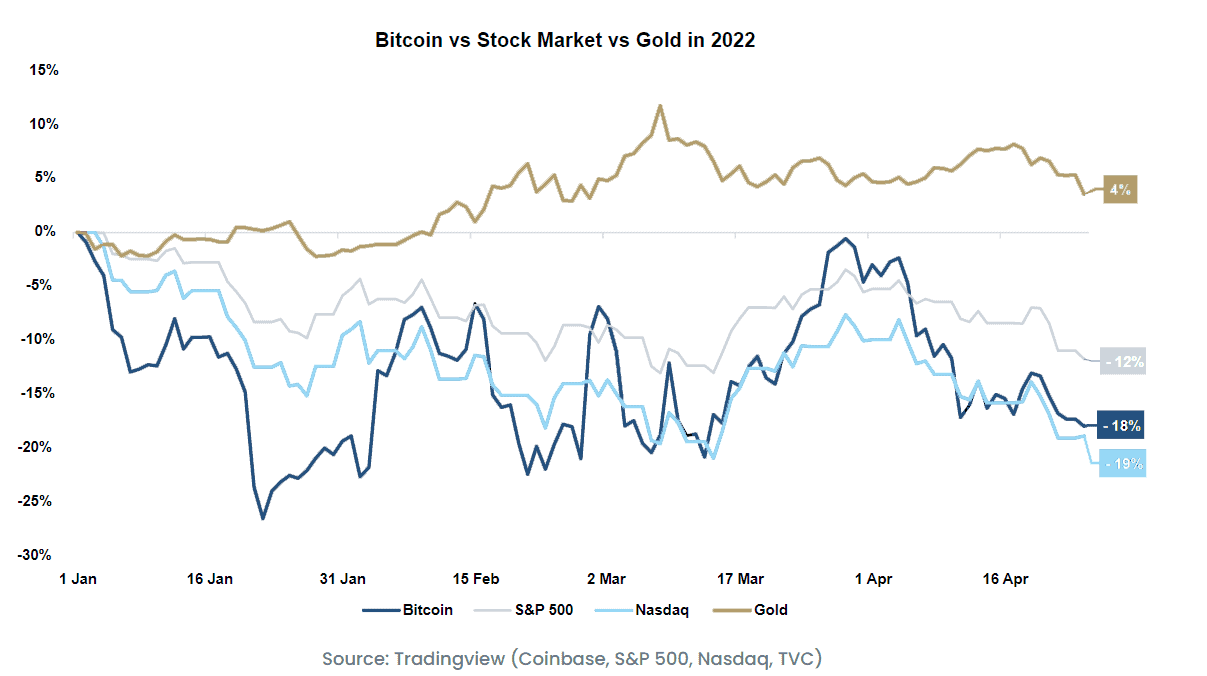
Cryptocurrency, particularly Bitcoin, is known for extreme price swings. Since its inception, Bitcoin has experienced several boom-and-bust cycles, with prices soaring before crashing. This volatility can be attributed to market sentiment, regulatory news, technological developments, and macroeconomic trends. Its high risk is matched by the potential for high returns, but it requires deep understanding and carries a significant chance of loss.
For example, during the 2017 bull run, Bitcoin's price rose from around $1,000 to nearly $20,000, only to fall to roughly $3,000 by the end of 2018. Similar patterns have occurred since, making cryptocurrency a high-risk, high-reward asset that is not suited to everyone. Past performance does not guarantee future results.
While some are drawn to the potential for outsized returns, others are wary of the risks. Cryptocurrencies remain relatively new, and their future is uncertain despite growing acceptance. Regulatory crackdowns, technological vulnerabilities, and competition from other digital assets could all affect their value, making them highly unpredictable.
Gold vs Bitcoin: The Edge Against Inflation
The ability to hedge against inflation is an important factor for many when choosing between gold and cryptocurrency.
Gold as an Inflation Hedge
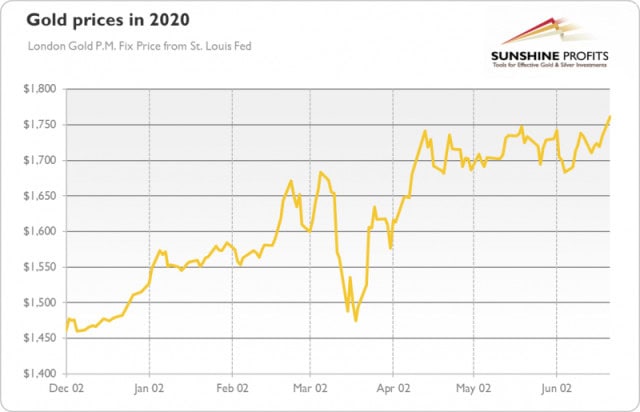
Source: Yahoo Finance
Gold as an Inflation Hedge
Gold has a well-established reputation as an inflation hedge. Throughout history, it has largely maintained its purchasing power during periods of high inflation. The chart above, for instance, shows how gold's price rose during the COVID-19 crisis.
In times of crisis, many people move toward tangible assets. This is because gold's value is not tied to any single currency or government policy. When inflation erodes the value of paper money, gold has tended to appreciate as people seek a more stable store of value, though past performance does not guarantee future results.
The relationship between gold and inflation is well-documented. During the 1970s, a period of high inflation, gold prices rose sharply as people turned to the metal to protect their wealth. More recently, during periods of economic uncertainty, gold has continued to perform relatively well, reinforcing its reputation as an inflation hedge.
Bitcoin as a Potential Inflation Hedge
Bitcoin is often compared to gold in terms of its potential to hedge against inflation. Proponents argue that its fixed supply of 21 million coins makes it a deflationary asset, unlike fiat currencies that can be printed at will. This scarcity, combined with growing adoption, could position Bitcoin as a digital alternative to gold.
However, there are important caveats. Unlike gold, Bitcoin does not have a long track record, and its ability to act as a reliable inflation hedge is still unproven. It simply has not existed long enough to provide sufficient data. While some see Bitcoin as a hedge against currency devaluation, others view it as a speculative, highly volatile asset, which could undermine its effectiveness as an inflation hedge.
In the short term, Bitcoin has at times shown correlation with traditional assets like tech stocks, which raises questions about its role as a safe haven. During the COVID-19 pandemic, for example, Bitcoin's price initially dropped alongside equities before rebounding later in the year. This contrasts with gold, which regained its value as a safe-haven asset more quickly during the same period.
For more information, see the World Gold Council website.